Description
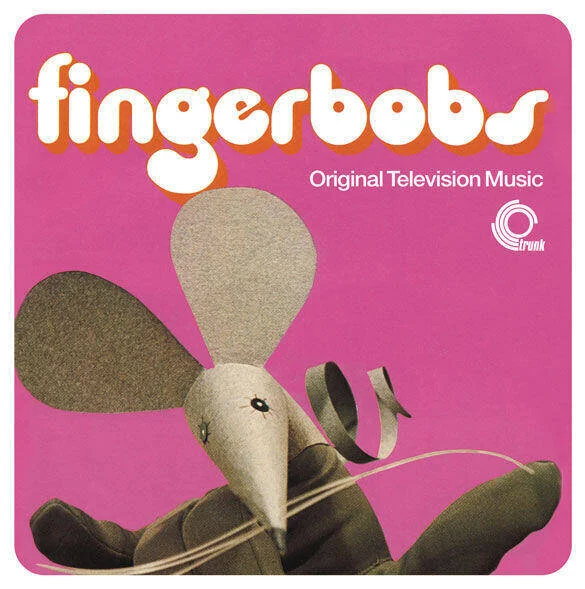
This has been on the cards for a good few years, but its only happening now. How very exciting. I can barely control myself. And you should have seen me when Lo Cole, the son of the Fingerbobs creators, turned up a tiny little promotional leaflet that was used to sell the series back when it was made. Anyway, musically this has been put together by Jon Brooks, and its a very charming thing. Here are Ali Coles notes, which are most interesting, and as clever and informative as youd expect from the daughter of the magic makers of 1970s TV.
Fingerbobs was created by my parents, Michael and Joanne Cole, in 1971, and first shown on the BBC on Valentines Day in 1972. The audacious Fingermouse was the indisputable star of the show, along with gentle, bearded Canadian Rick Jones, who played the part of Yoffi the human narrator with a certain twinkle in his eye and a gift for gentle improvisation. As a young teenager, I remember our mother working late into the night creating all the main characters Fingermouse, Gulliver the seagull, Scampi and Flash the tortoise; we were surrounded by a sea of fingermice (made of cones and tubes of grey paper) with especially reinforced noses, as well as piles of stretchy, coloured gloves. She also created a marvelous cast of secondary characters, including Louise the squirrel, with a curly tail made of wood shavings, Prickly Friend the hedgehog bristling with cocktail sticks (1970s dinner party style), and a brotherhood of worms (Herbert, George and Alistair) made of naked gloved fingers. The homely do-it-yourself nature of the whole enterprise was conveyed in the title sequence, which used the full-screen backdrop of a 1970s rope place mat.
Our father wrote the stories, songs and ingeniously simple scripts, drawing on his experience as a copywriter, childrens author (notably the Bod books) and scriptwriter for the BBC (Playschool), and his anarchic Jewish humour. The idea came from his fascination with the gesticulating human hand, with its endless capacity for inventiveness. Rick Jones, who had previously worked with our father on Playschool and had come from the folk music scene, remembers the name of his character, Yoffi, as being Hebrew slang for happy/cheerful. My dad had come across the word on a trip to Israel. Rick was originally intended to wear a cardboard mask of a smiling old man, but this was dropped after the test footage in favour of his beaming, hippyish self. The small core team included the director Michael Grafton Robinson, the musician Michael Jesset (previously of Jackanory), the animator Maureen Lonergan, and cameraman John Abbot. John had previously covered major warzones, but according to Ricks recollections had had enough of war. On the last day of filming, he conspired with Rick to ceremoniously drown Fingermouse in Ricks unfinished cup of coffee with the camera still rolling.
Our family all six of us were living in a small flat in Montagu Square, London at the time of Fingerbobss creation, and my teenage cousin had also come to stay. She was on a put-you-up in mums study, and her budgie (who came too) used to fly around the room and, to mums despair, decorate her newly created artwork. One of my favourite of these was the giant cut-out marmalade cat, with one eye open, which Fingermouse used to perform his famous body swerves around.
Only 13 episodes were made a combination of live action (of the gentlest variety), simple animation, and cheap stop-motion animation. All the main characters were facets of our parents sensibility from the small, bold and mischievous Fingermouse, to the operatic Gulliver, to Scampi and her glam girlfriends, to Flash who carries with him all the weariness and resignation of our Russian Jewish forbears (a shrug in a beautifully decorated shell). All these characteristics were encapsulated in their wonderful signature songs. But the most memorable song of all, was the title song Yoffi lifts a finger, and a mouse is there, puts his hands together, and a seagull takes the air when the magical transformation, from creator to creature, from hand to being, begins to occur.
The 15-minute espisodes were constructed around one idea stones, feathers, strings, or seeds which would teach children about textures, for example, but from which the imagination would take flight. Yoffi would send out his puppet helpers to gather the raw materials for his many stories. One of my favourite episodes features a concertina of cut-out paper Mexicans dancing on stones, with feathers (that have been patiently collected by the characters) stuck to their feet. Each of the stories would be accompanied by lyrical music, featuring acoustic guitar, woodwind, cello but also xylophone and a whole variety of percussion and world rhythms. Music was an essential part of this magical world of storytelling as was the stylised backdrops of sky, landscape, shore and sea. In the String episode, there was one real-life intervention in the form of real-life feet kicking a ball: my 10-year-old brother Lo given a moment of stardom.
Reflecting on the series in a radio programme of 1995, my father spoke of the influence of Heinz Edelmanns psychedelic cartoon designs for the Beatles Yellow Submarine and Terry Gilliams found images in Monty Pythons Flying Circus. These were two of our familys favourite things, and account for much of the visual as well as the verbal wit. For many fans, this reached its apotheosis in the episode when Scaredy Crow tried to drink some unreachable water from a tall jar: a moment of pure slapstick.
This homemade quality, from the ping-pong ball head of Gulliver to Flashs removable shell which could be used to carry all sorts of things (upturned) encouraged everyone who watched to make the characters for themselves. There were simple instructions you could follow, especially for making Fingermouse. We had a newspaper cutting from later years in which Prince William was described as sporting a home-made Fingermouse of his own. The home-industry element spilled into our lives at home, with boxes and boxes of mums marvelous and battered creations. Only one box now survives, as our kids played with the remnants, including an assortment of birds and a fingermouse with body and squiggly tail (but no head). Later, when the programme had first aired, and mum and dad were snowed under with new projects (including the transfer of Bod from book to TV), my brother Lo and I took it in turns to do the Fingerbobs comic for mum as the deadlines loomed.
Fingerbobs was shown continuously right up into the mid 1980s. Then, in 1985, the son of Fingerbobs Fingermouse was born, with a bigger production team and musical instrument storytelling at its heart. But, for us, the creative magic and the spirit of homeliness, imagination and inventiveness on a shoestring, belong to the original classic Fingerbobs.
Reviews
There are no reviews yet.