
Description
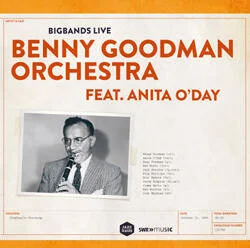
Benny Goodmans playing was the embodiment of swing. Moreover, his silky-smooth tone helped boost the clarinets status as lead instrument throughout the decades of the swing era. And whatever one says about the qualities of the soloist, is equally true of the bands he led exemplary symbioses of perfection and feeling. The momentum his music generates derives from the lively inspiration of the jazz rhythms themselves. The concerts opening number, Lets Dance, became Benny Goodmans theme tune when he rose to stardom on a radio show of the same name with his band in 1934. With his orchestras Benny Goodman played dance music; but with his trios, quartets and sextets he refined the genre into a form of chamber music with artistic ambition. For Goodman was never afraid to bridge the divide between jazz and classical music, to introduce triumphant swing to Carnegie Hall, or to feature Afro-American musicians in his white orchestras.
Freiburg, 15 October 1959. With a handpicked band, an unerring sense of swing and proven entertainer qualities, Benny Goodman had no trouble whipping the two thousand jazz fans at the citys Stadthalle into a frenzy. Although Goodmans days of musical trendsetting were long since over, what he achieved with this ten-piece ensemble was almost timeless in quality and can only be classified as Goodman Classicism. Since the early 1950s he generally only assembled bands like this for recordings and tours. The tour in October 1959 started in Munich, before following a route via Paris, Copenhagen, Stockholm, Basel and Vienna. Freiburg was the seventh of twenty venues in total. The band, which featured such exceptional soloists as Red Norvo, Bill Harris, Flip Phillips and Russ Freeman, was possibly one of the finest Benny Goodman ever put together in the post-war years. And German audiences still starved of true swing gave its King a rapturous reception.
Notwithstanding to the individual brilliance of its musicians, one of the strengths of this touring band assembled by Benny Goodman was the way it combined a range of orchestral colours with the flexibility of smaller ensembles drawn from among the band members. In Anita ODay, the bandleader had brought to Europe a singer whose recordings already enjoyed a massive following, millions of fans who were not alone in considering her one of the outstanding white jazz vocalists of the day. In these recordings she demonstrates her versatility and originality with a spectrum that ranges from interpretations of romantic ballads to lightning quick improvisations with scat vocals. The bands repertoire offers a kaleidoscopic mix of jazz standards and Goodman classics, giving each performer ample material to work with the whole programme effectively choreographed by the bandleader himself. What we have here is great music combined with top-level entertainment one would expect nothing less from such a moment in the history of jazz.
Reviews
There are no reviews yet.