
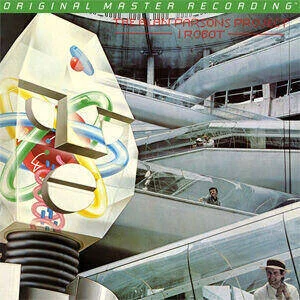
Description
Audiophiles neednt any introduction to the Alan Parsons Projects I Robot. Engineered by Parsons after he performed the same duties on Pink Floyds Dark Side of the Moon, the 1977 record reigns as a disc whose taut bass, crisp highs, clean production, and seemingly limitless dynamic range are matched only by the sensational prog-rock fare helmed by the keyboardist. Not surprisingly, its been issued multiple times. Can it be improved? Relish Mobile Fidelitys stupendous-sounding 180g 45RPM 2LP set and the question becomes irrelevant.
Mastered from the original master tapes and pressed at RTI, and afforded the luxurious groove space of a 45RPM LP, I Robot comes to life like never before on this numbered limited-edition reissue. Boasting immaculate highs and lows, generous spaciousness, and see-through transparency that takes you into the studio with Parsons and creative partner Eric Woolfson at Abbey Road, this super-clean edition has been lovingly restored by Mobile Fidelity engineers with the intention of demonstrating the full-range capabilities of the worlds best stereo systems. Put simply, theres more music, more information, more detail, more nuance, more everything.
Savour reference-grade soundstages, immersive smoothness, sought-after instrumental separation, three-dimensional imaging, and consummate tonal balances. Able to be played back at high volumes without compromise or fatigue, the analogue masterwork is a demonstration record for the ages the likes of which are no longer being made. Longtime fans can finally rest assured knowing they dont have to pony up hundreds of dollars for older pressings including three prior Mobile Fidelity versions on LP and CD. This is the very reason you own and invest in high-end audio gear.
Inspired by and loosely based around the Isaac Asimov stories of the same name, I Robot delves into themes of artificial intelligence and technological dominance that make the record increasingly relevant in the 21st century. Lyrically, songs such as The Voice call into question human behavior and their relationship to increasing robotic supremacy in everyday life. Sonically, Parsons reflects the associated paranoia, dichotomy, and transformation via shifting sci-fi arrangements steeped in drama and moodiness.
I Robots absorbing tunes also continue to fascinate due to their perfectionism and innovation. Borrowing from Pink Floyds strategies, Parsons utilizes a looped sequence on the title track to create new downbeats. Some Other Time employs two different lead vocalists and yet gives the illusion only one is involved. Captivating strings, a piccolo trumpet, and bona fide pipe organ grace Dont Let It Show. The origins of Nucleus stem from a unique analog keyboard concoction dubbed the Projectron, devised by Parsons and electronic engineer Keith Johnson. Andrew Powells orchestral and choral arrangements top it all off, with Total Eclipse arriving as an aptly frightening track that presages the climactic Genesis Ch. 1 V. 32.
Does man or machine win in the end? Decide with Parsons as you get lost in Mobile Fidelitys definitive pressing



Reviews
There are no reviews yet.